"David hated competency frameworks"

I’m taking as my inspiration for today’s Blog Professor Bob Garvey’s Memorial Lecture for David Megginson.

This was the opening session of Coaching at Work’s wonderful (as usual!) conference in November 2025.
Let me tell you a little about Professor David Megginson first off.
David Megginson (1943-2021) was Professor of HRD at Sheffield Hallam University, establishing and leading on the Masters in Coaching & Mentoring for many years.
He was widely published (his first book being published as far back as 1979: ‘A Manager’s Guide to Coaching’).
He co-founded the EMCC.
He envisioned ‘coaching for all’, and ‘coaching doing societal good’.
Bob Garvey described him as ‘a scholar and a gentleman’. And a ‘pragmatic visionary’. As well as his Executive Coaching academic pursuits, he was a lover of music, nature, poetry, barefoot running and yoga. He was a Quaker.
I happened upon some beautiful tributes online, many from the coaching community. I didn’t know him, so it is very special to hear others’ words.
From Louise Buckle:
“David was inspirational as a coaching leader and as a human being. He helped us see the world as it is, not as we would like it to be. Great at debunking myths, with humour and that twinkle in his eye - mischievous even…..a much needed mind in these complex and challenging times. Erudite and compassionate, calm and lighthearted, a wonderful mentor. Underneath everything he brought to our industry David was simply a deeply kind and generous human being who carried a lot of love and wonder for the world in his heart.”
Katherine Long refers to his ‘compassionate disruption’:
“Holding the coaching world to account, challenging it to look deeply into itself, not hide behind its sacred cows - I remember his playful session title ‘does contracting make us smaller?’ and have shared that quote many times….
There was always a twinkle in his eye, a feeling of mischief just below the surface, (and) the joyous bow ties.”
It is clear that David brought much wisdom, humility, compassion, intelligence and humanity to his work, and touched a lot of people during his life.

I wrote last year about competency frameworks and coach maturity:
I’ve continued to reflect and process ideas about coach maturity.
I’m interested in how pervasive and tenacious the ‘should’s’ and ‘should not’s’ are in our profession. E.g.
“I shouldn’t have an agenda”
“I should be neutral”
“I can’t give my opinion”
“I can’t bring ‘me’ into the coaching conversation”
“There should always be a clear coaching goal”
I’m reminded of my one and only visit to a psychoanalyst, many years ago. (And I’m only giving my experience of one psychoanalyst, this obviously does not represent the community of psychoanalysts….)
I’d gone along for a no-obligation initial meeting.
As a Trainee Therapist, I was required to be in therapy. I found it very useful, it was a hugely developmental period of my life, in my 30s.
I guess I was a fairly experienced client.
And the two previous therapists I had worked with (one for 1-1 therapy, and one for group therapy) were kind, compassionate yet boundaried practitioners.
The psychoanalyst I visited showed me to the large therapy room in her home. She was – at a guess – in her 70s.
She gave me the choice of an armchair or a single bed. I chose the armchair.
And to my surprise, she took her seat in the far corner of the room. Kind of behind me. I could see her if I looked over my left shoulder.
We started to talk, and I realised she was hard of hearing. I had to raise my voice so she could hear me at the other end of the room.
She asked what I was looking for from therapy. I said what was most important to me was ‘being understood’. That I’d come to this realisation, that someone else truly ‘getting’ me, helping me understand myself, was if you like, the next stage in my development. And that I was looking for a relational therapist.
The irony, that I probably had to repeat all of this, be a bit more ‘shout-y’, because of her difficulty in hearing.
She somehow took what I was saying, in the direction of ‘anger at my mother’. Repressed anger she said, which I probably wasn’t conscious of, and needed to work on in therapy. I was truly perplexed.
As my defences and irritation increased, I wished only for the session to be over, and to be out of that room. It was rare for me to feel so MIS-understood!
I’m pretty sure I did say something about feeling annoyance towards her, because she didn’t seem to be listening to me, nor seeking to understand me. She was having none of that; she was the Freudian ‘blank screen’. ‘Nothing to do with me, I’m neutral’.
I was so glad that I knew enough of how therapy works, to know that my experience with this analyst ‘just wasn’t right’.
Her approach could well have been just what many people needed. But it wasn’t what I needed.
Was she a professional, ethical practitioner?
Probably.
Was she highly trained, highly qualified, with many years of experience?
Absolutely. She came highly recommended from a reputable institution.
Did she meet all the Psychoanalysts’ Competences?
I would bet that she did.

And so, herein lies my point.
Do models, techniques, competences – lead to effective 1-1 helping relationships?
Does the almost exclusive reliance on tens and tens of behavioural indicators really help us have nuanced, delicate, skilled, human-to-human helping conversations with our clients?
“David Megginson hated competency frameworks.”
Bob Garvey followed this assertion with “He saw them as reductionist, not reflective of the complex task of coaching.”
Any human-human conversation/connection/session is indeed complex. When we really think about it.
I’m reminded of the two hemispheres of our brain, and Dr Iain McGilchrist’s wonderful work in this area.
Our left hemisphere LOVES linear processes, rational problem solving, a clear definition of ‘the problem’ and the joy of a clear solution. Practical outcomes, practical actions. Behavioural Indicators, Competency Descriptors, Competency Frameworks, rating scales 1-10.
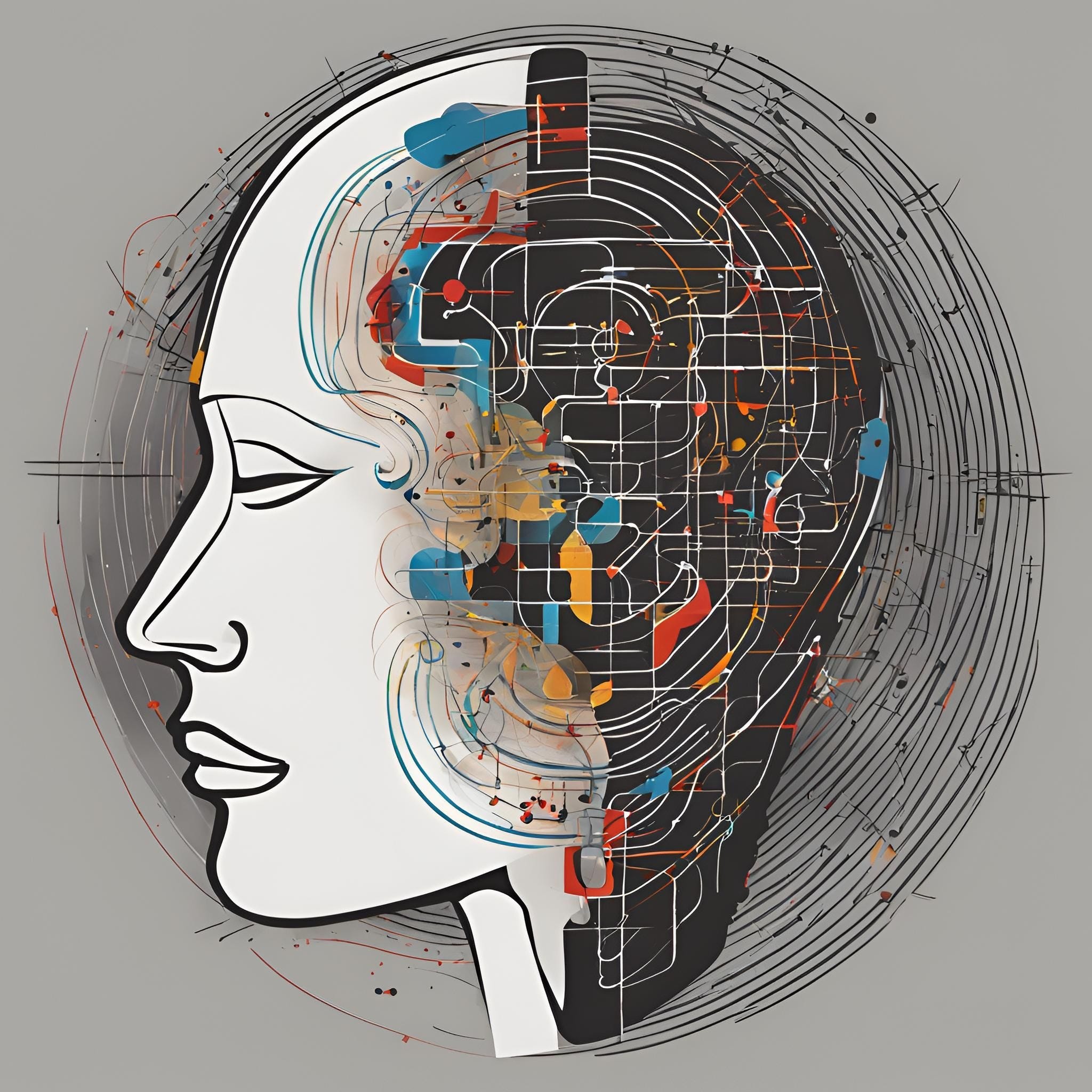
Our right hemisphere is the opposite.
Our right hemisphere loves the emotional, the embodied, the connected, the intuitive. The interconnections, the interbeing-ness of everything. That which can’t be defined. The way in which we are moved by music, by a poem, a painting, a dance performance on stage. No analysis, just human-ness. Being moved as a human. And not being able to articulate why.

Albert Einstein and Iain McGilchrist tell us that we used to be predominantly right hemisphere as human beings. McGilchrist says 70% right hemisphere. For practically all of our existence as a human species (99.99999%).
But over recent centuries, we have become 70% left hemisphere.
And it’s not good for us.
And it’s not good for the planet, and all beings on the planet.
In short, we need to reverse the trend, and work towards being 70% right hemisphere again.
It’s not ‘either/or’.
(That’s our left hemisphere at work, if we’re thinking that way. Sorry!)
It’s the balance.
What if we as coaches were 70% in our right hemisphere, as we sit with a client?
What if our reflections after a client session were 70% right hemisphere?
What if 70% of our CPD were right hemisphere?
Indeed, what if our internal lived experience, day in, day out, was 70% right hemisphere?
(Remembering, that still leaves 30% in all of the above, for our left hemisphere….)
Going back to Bob Garvey’s talk…
If competency frameworks are reductionist and insufficient, how DO coaches develop?
Garvey advocates much greater diversity and honouring of differences – global differences, within the coaching profession. I believe this will be really helpful for us in the Western world (Global North). He also advocates greater discourse between the Professional Bodies, researchers, and practitioners. He believes CPD run by practitioners to be the best developmental offering coming out of the Professional Bodies. He advocates supervision.
And honouring David Megginson as I close out. What if we as coaches were to be more mischievous?! What if we hid less behind ‘sacred cows’?
As I muse, and bring back to mind the ‘talents’ of our right hemisphere, these reflective questions come to me:
- If I could be anyone I want, my truest self as a coach, who would I be?
- How would that look, as I imagine myself sitting with a client?
- What would be the energetic dance between us?
- What would the magic look like?
And reflecting after being with a client:
- How do I feel in my heart?
- How did I see their humanity?
- If there was something mystical about our co-created experience, what would that be?
- What’s my body telling me? My somatic, body-wisdom?
CPD:
- If I could imagine the most delicious, affirming, stretching (yet perhaps paradoxically comforting) CPD for me, as a person and a coach, what would that be?
- What experiences in my life, either recently or more historically, have impacted me the most, and led to my growing wisdom as a human?
- Spiritually, where am I at? How do I hold the bigger view of life and death?

‘Til Next Time….Go Well
Thanks Wendy great article. I have always wondered about this grading system ACC PCC MCC et al ; this obsession with categorisation, performance & doing. What about ‘being’ and not doing. To set out to ‘do’ inherently imbalances any relational integrity. Presence is so important and unfortunately Presence itself has become a branding trope in coaching. If you are trying to be present you probably are not ! Less is more 🌻😊🎶
Thanks Wendy great article. I have always wondered about this grading system ACC PCC MCC et al ; this obsession with categorisation, performance & doing. What about ‘being’ and not doing. To set out to ‘do’ inherently imbalances any relational integrity. Presence is so important and unfortunately Presence itself has become a branding trope in coaching. If you are trying to be present you probably are not ! 🌻😊🎶